


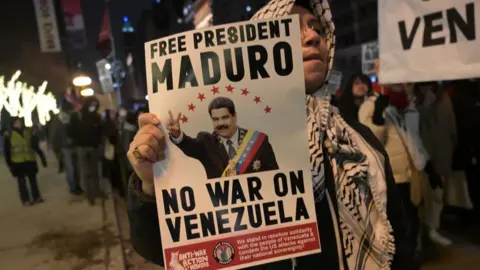
This past Monday, a handcuffed, prison-uniform-wearing Nicolás Maduro stepped off a armed forces helicopter in New York City, flanked by armed federal agents.
The Caracas chief had been held overnight in a well-known federal jail in Brooklyn, prior to authorities moved him to a Manhattan federal building to answer to indictments.
The Attorney General has stated Maduro was delivered to the US to "face justice".
But international law experts doubt the lawfulness of the government's maneuver, and argue the US may have breached established norms concerning the use of force. Under American law, however, the US's actions occupy a juridical ambiguity that may nonetheless lead to Maduro standing trial, irrespective of the events that brought him there.
The US insists its actions were lawful. The administration has accused Maduro of "narco-trafficking terrorism" and abetting the transport of "massive quantities" of cocaine to the US.
"Every officer participating operated professionally, decisively, and in complete adherence to US law and established protocols," the top legal official said in a statement.
Maduro has repeatedly refuted US allegations that he runs an narco-trafficking scheme, and in the federal courthouse in New York on Monday he entered a plea of not guilty.
Global Legal and Enforcement Concerns
Although the charges are related to drugs, the US prosecution of Maduro comes after years of censure of his rule of Venezuela from the United Nations and allies.
In 2020, UN investigators said Maduro's government had committed "egregious violations" constituting international crimes - and that the president and other top officials were implicated. The US and some of its allies have also alleged Maduro of rigging elections, and did not recognise him as the legal head of state.
Maduro's alleged ties with criminal syndicates are the centerpiece of this legal case, yet the US tactics in placing him in front of a US judge to face these counts are also being examined.
Conducting a armed incursion in Venezuela and taking Maduro out of the country under the cover of darkness was "entirely unlawful under international law," said a legal scholar at a institution.
Legal authorities pointed to a series of problems presented by the US operation.
The UN Charter prohibits members from threatening or using force against other states. It permits "military response to an actual assault" but that threat must be immediate, professors said. The other allowance occurs when the UN Security Council approves such an operation, which the US failed to secure before it acted in Venezuela.
International law would regard the drug-trafficking offences the US claims against Maduro to be a law enforcement matter, experts say, not a violent attack that might permit one country to take military action against another.
In official remarks, the government has described the mission as, in the words of the Secretary of State, "essentially a criminal apprehension", rather than an hostile military campaign.
Historical Parallels and US Jurisdictional Questions
Maduro has been formally charged on illicit narcotics allegations in the US since 2020; the Department of Justice has now issued a superseding - or new - charging document against the Venezuelan leader. The executive branch argues it is now carrying it out.
"The action was conducted to support an active legal case related to large-scale narcotics trafficking and connected charges that have incited bloodshed, created regional instability, and exacerbated the opioid epidemic claiming American lives," the AG said in her statement.
But since the apprehension, several jurists have said the US broke international law by extracting Maduro out of Venezuela unilaterally.
"A country cannot enter another foreign country and detain individuals," said an authority in global jurisprudence. "If the US wants to detain someone in another country, the correct procedure to do that is a legal process."
Even if an defendant is accused in America, "The US has no legal standing to travel globally enforcing an legal summons in the lands of other sovereign states," she said.
Maduro's legal team in court on Monday said they would contest the propriety of the US operation which took him from Caracas to New York.
There's also a persistent scholarly argument about whether commanders-in-chief must comply with the UN Charter. The US Constitution regards accords the country signs to be the "supreme law of the land".
But there's a clear historic example of a presidential administration contending it did not have to observe the charter.
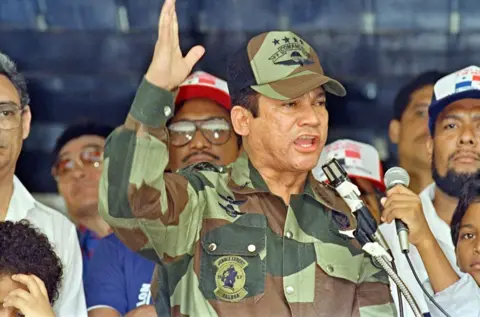
In 1989, the US government removed Panama's strongman Manuel Noriega and brought him to the US to answer narco-trafficking indictments.
An confidential legal opinion from the time argued that the president had the legal authority to order the FBI to arrest individuals who violated US law, "regardless of whether those actions breach customary international law" - including the UN Charter.
The draftsman of that memo, William Barr, later served as the US AG and issued the initial 2020 charges against Maduro.
However, the document's reasoning later came under scrutiny from academics. US the judiciary have not made a definitive judgment on the question.
Domestic Executive Authority and Jurisdiction
In the US, the question of whether this action broke any US statutes is complex.
The US Constitution grants Congress the prerogative to commence hostilities, but places the president in charge of the troops.
A Nixon-era law called the War Powers Resolution establishes limits on the president's power to use military force. It compels the president to inform Congress before sending US troops into foreign nations "to the greatest extent practicable," and notify Congress within 48 hours of deploying forces.
The government did not give Congress a prior warning before the operation in Venezuela "to ensure its success," a cabinet member said.
However, several {presidents|commanders
